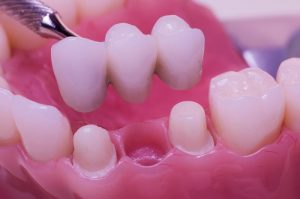
 Dental Bridges in Turners Falls, MA
A missing tooth affects more than just the look of your smile — it can impact your bite, put strain on surrounding teeth, and lead to bone loss over time. A dental bridge is a proven, fixed solution for replacing one or more missing teeth without the need for surgery. At Turners Falls Dental, Dr. Collura designs custom dental bridges that restore your smile’s appearance and function seamlessly. Call (413) 774-6553 to schedule your consultation.
What Is a Dental Bridge?
A dental bridge is a fixed restoration that literally “bridges” the gap left by one or more missing teeth. It consists of one or more artificial teeth (called pontics) held in place by dental crowns that are cemented onto the natural teeth on either side of the gap. These supporting teeth are called abutment teeth. Once cemented, a dental bridge is permanently fixed — it does not come in and out like a removable partial denture.
Modern dental bridges are crafted from high-quality porcelain, ceramic, or porcelain-fused-to-metal materials, carefully matched to the shade of your surrounding teeth for a natural, cohesive appearance.
Types of Dental Bridges
Dr. Collura will evaluate your specific situation to recommend the most appropriate type of bridge:
Traditional Dental Bridge
The most common type, a traditional bridge uses crowns cemented onto the two natural teeth adjacent to the gap to support the pontic (artificial tooth) in between. This is ideal when healthy teeth are present on both sides of the missing tooth space.
Implant-Supported Bridge
Rather than relying on adjacent natural teeth for support, an implant-supported bridge is anchored by dental implants placed in the jawbone. This option preserves bone density, does not require altering healthy neighboring teeth, and tends to be the most durable long-term solution for replacing multiple consecutive missing teeth.
Cantilever Bridge
Used when there is only one natural tooth adjacent to the gap, a cantilever bridge is supported by a crown on one side only. This option is less common and typically reserved for specific clinical situations.
The Bridge Placement Process
Getting a traditional dental bridge at Turners Falls Dental typically requires two appointments:
- Tooth Preparation: The abutment teeth on either side of the gap are gently shaped to accommodate the crowns. An impression is taken and sent to the dental lab. A temporary bridge is placed to protect the prepared teeth in the meantime.
- Permanent Placement: When your custom bridge is ready, Dr. Collura removes the temporary, checks the fit and aesthetics, and permanently cements the bridge in place.
Dental Bridge vs. Dental Implant
Both bridges and dental implants effectively replace missing teeth, but there are important differences to consider. A bridge requires altering the adjacent healthy teeth, while an implant is entirely self-supporting. Implants also prevent bone loss in the jaw, which bridges do not. However, bridges involve a shorter treatment timeline and are generally a lower upfront cost. Dr. Collura will help you weigh the options based on your oral health, timeline, and priorities so you can make the best decision for your smile and long-term wellbeing.
If you also have concerns about gum health, existing dental conditions, or would like to explore cosmetic improvements alongside tooth replacement, Dr. Collura will take a comprehensive approach to your care.
Frequently Asked Questions About Dental Bridges
How long does a dental bridge last?
With proper care, a dental bridge typically lasts 10–15 years or longer. Maintaining excellent oral hygiene — including careful flossing under the pontic — and keeping up with your regular dental exams at Turners Falls Dental will help maximize the lifespan of your bridge.
Is getting a dental bridge painful?
The bridge procedure is performed under local anesthesia, so the tooth preparation process should not be painful. After your appointment, the prepared teeth and surrounding gum tissue may be mildly tender for a few days. Most patients find the discomfort easy to manage with over-the-counter pain medication.
How do I clean under a dental bridge?
Cleaning under the pontic (the artificial tooth) requires flossing with a floss threader or using an interdental brush or water flosser to remove plaque and food debris from beneath the bridge. Our team at Turners Falls Dental will demonstrate the best technique at your appointment.
Can I eat normally with a dental bridge?
Yes. Once your bridge is permanently cemented and you’ve adapted to it, you should be able to eat most foods normally. In the first few days after placement, stick to softer foods. Avoid very hard or sticky foods that could put excessive stress on the bridge over time.
How many teeth can a bridge replace?
A traditional bridge can replace one to three consecutive missing teeth, depending on the strength and health of the abutment teeth. For larger spans or patients missing many teeth, an implant-supported bridge or other solution may be more appropriate. Dr. Collura will assess your specific situation during your consultation.
Will a dental bridge look natural?
Yes. Dr. Collura carefully selects bridge materials that match the shade, shape, and translucency of your natural teeth. A well-crafted bridge from Turners Falls Dental is virtually indistinguishable from natural teeth.
Does insurance cover dental bridges?
Most dental insurance plans cover a portion of the cost of a dental bridge, especially when it is needed to restore function after tooth loss. Coverage varies by plan. Call (413) 774-6553 or contact your insurance provider to verify your benefits before scheduling your appointment.